


At just 33 years old, Dr. Sally Martin Katz is making her mark as the Photo Curator for the Fine Arts Museums of San Francisco, which encompass both the de Young Museum and the Legion of Honor. As the de Young museum prepares to unveil Paul McCartney Photographs 1963–64: Eyes of the Storm on February 28, we had the opportunity to speak with Dr. Katz about her role in curating this highly anticipated exhibition.

Sally Martin Katz looking at Edward Weston’s work at SFMoMA
A specialist in documentary photography, Dr. Katz studied at Brown University and the Rhode Island School of Design (RISD) before earning her PhD from the Sorbonne. While in Paris, she gained invaluable experience working at the Louvre and the Fondation Henri Cartier-Bresson, balancing academic research with hands-on curatorial practice. She later returned to the U.S., where renowned photography curator Clément Chéroux recruited her as a Curatorial Assistant at SFMOMA.
In this interview, Dr. Katz shares her insights on McCartney’s photographic eye, the power of visual storytelling, and how her Franco-American journey has shaped her career. We also delve into her curatorial philosophy, her commitment to documentary photography—especially the work of women photographers—and the path that led her to one of the most prestigious curatorial roles in San Francisco. Read on for an exclusive look!
MerciSF: As the current photo curator at FAMSF, you have lived and worked in New York City, Paris, and San Francisco, and have studied and pursued your career in both France and the U.S. Could you share some insights into your professional journey and how it all began?
SMK: My journey into the art world began with my early exposure to museums in New York City, where visiting places like the Met and MoMA became a regular part of my life. At age 10, my mother gifted me her old Canon AE-1 camera, which sparked my lifelong passion for photography. I pursued this interest by enrolling in an intensive program at the International Center of Photography (ICP), where I not only received technical and darkroom training but also discovered the works of legendary photographers like Diane Arbus, Bruce Davidson, and Lee Friedlander. That experience deepened my understanding of photography’s artistic and documentary power. I went on to study Art History and French Literature at Brown University while also taking photography courses at RISD, allowing me to blend both academic and artistic perspectives. My love for art and French culture led me to study abroad at the Sorbonne, where I fully immersed myself in the French education system.
MerciSF: Your deep connection to French culture is well known, and I would describe you as one of the most Francophile Americans in San Francisco. Beyond the influence of your French nanny, what else sparked your passion for France and its culture? And how have your experiences in France shaped your academic path and curatorial approach, particularly in the field of photography?
SMK: From an early age, I was immersed in French culture through my nanny, who spoke only French to me. I absorbed the language, music, food, and lifestyle, and it resonated deeply with me. Later on, my parents kept the connection alive by hosting French PhD students, further enriching my experience. I continued learning French formally at the Alliance Française in New York and in school, eventually developing a passion for French literature. Studying abroad at the Sorbonne deepened my immersion, exposing me to a new academic system and refining my interests, especially in photography, in the inspiring setting of Paris & its deep ties to photography.
It was there that I took classes with Michel Poivert, a renowned historian of photography. His lectures were transformative, reaffirming my commitment to studying the history of photography. He eventually became my mentor and thesis advisor. Studying American photography in France may seem unconventional, but I found that bringing an American perspective into French scholarship enriched the cross-cultural dialogue that has always been so important to me. My experience in France shaped not only my academic path but also my approach to curating—bridging perspectives and fostering deeper conversations between the two cultures.
MerciSF: You recently completed your PhD at La Sorbonne in December, successfully defending your thesis in French over the course of five hours. What was the subject of your research, and how would you describe the experience?
SMK: My thesis, titled Un Objectif, six photographes américaines de documentaire social de 1970 à nos jours, examines the work of six American women photographers engaged in social documentary from the 1970s to the present. While I wrote it in both French and English, I officially submitted only the French version. In English, the title would be Through the Feminist Lens: Six American Social Documentary Women Photographers from the 1970s to Today.
Defending my dissertation was a remarkable and intellectually stimulating experience—one that I will always cherish. It is rare to have five esteemed scholars read and engage deeply with 500 pages of one’s work, and their thoughtful analysis made for an incredibly rewarding discussion. Presenting a synthesis of my research, articulating my findings, and considering the broader implications of my work was both a challenge and an opportunity. The committee’s questions—about my choices, the inclusion or exclusion of certain artists, and the theoretical frameworks I applied—pushed me to defend my decisions and engage in a meaningful dialogue. It was intense, certainly, but also exciting. The defense went exceptionally well, and knowing that my work was well received made the experience all the more gratifying. I loved it. It was really a fun moment. Intense, but very fun.
MerciSF: How would you define the social documentary genre and why did you choose to present American women photographers vs French photographers?
SMK: Social documentary photography captures real-life events and social issues, often with the aim of raising awareness or advocating for change. I chose to focus on American women photographers because, during the height of the women’s movement in the 1970s, the United States provided more opportunities for women to establish themselves in this field. My study includes six photographers: Susan Meiselas, Mary Ellen Mark, Donna Ferrato, Lynsey Addario, Stephanie Sinclair, and Lauren Greenfeld.
While social documentary photography has historically been a male-dominated genre, the feminist movement in the U.S. allowed more women to break into this space. Pioneering figures like Meiselas and Mark were able to claim a place in the industry, whereas in other countries, particularly France, women faced greater barriers to entering this domain. That’s not to say female photographers were absent in other genres—figures like Lee Miller, Dora Maar, and Germaine Krull were prominent in surrealism and modernist photography. However, the documentary field remained largely a “boys’ club,” shaped by a culture that was resistant to female perspectives.
In my research, I also contextualized these photographers’ work within feminist theory, drawing from both American and French theorists. While my primary focus was on American women, I aimed to highlight the broader cultural and theoretical landscape that shaped their contributions to the field.
MerciSF: Will this feminist perspective influence your future curatorial work? Is this a theme you intend to explore further?
SMK: Absolutely! I am deeply committed to highlighting the work of women photographers. There is still significant progress to be made in ensuring women’s rightful place within the art world and the history of photography, which has long been dominated by male artists featured in major museum exhibitions and historical narratives. The work of recognizing and elevating women in this field is far from complete, and I intend to foreground their contributions as much as possible in my curatorial practice.
I am particularly drawn to social documentary photography because it merges artistic expression with a strong social purpose. In my doctoral research, I examined photography as a tool for social change, particularly in addressing women’s issues. More broadly, I see the camera not only as a means of communication but also as a catalyst for mobilization and activism. The intersection of art and activism is central to my work, and I am especially interested in visual storytelling—using photography to engage with contemporary social, cultural, and political realities. While I can certainly appreciate abstract photography, I find the greatest power in images that convey meaningful narratives and provoke thought.
MerciSF: In the past, you worked with budding and/or local photographers. Will you be able to pursue that in your new role, and could you name a few local photographers?
SMK: Absolutely, I plan to continue focusing on local photographers. The Bay Area has an incredible photography community with a rich history dating back to the 19th century. San Francisco is truly a photo town, with many internationally recognized photographers based here. It’s wonderful to be part of a community that values and privileges photography. Some notable local photographers include Richard Misrach, Janet Delaney, and Lucas Foglia, among many others. Their work is featured in the permanent collections of the Fine Arts Museums, SFMOMA, and other institutions. Highlighting our local community is important for engaging with and serving our audience. It’s crucial to foster a dialogue between the local and the global, the historic and the contemporary, to create a trans-historical narrative. The Fine Arts Museums, with their encyclopedic collection, are particularly well-suited for this approach.
MerciSF: Now let’s jump back to the ’60s and the opening exhibition at the de Young Museum, Eyes of the Storm. Tell us more about your role as a curator of this exhibition?
SMK: I am the organizing curator of this exhibition for the De Young museum, but it’s a traveling exhibition that began at the National Portrait Gallery in London. Paul McCartney curated it himself there alongside his archivist and the curator for the National Portrait Gallery. And then it has subsequently been traveling around the world to different museums. So I am the curator for the San Francisco presentation of the exhibition.
MerciSF: The photographs in the “Eyes of the Storm” exhibition offer a rare behind-the-scenes look at the Beatles’ meteoric rise. What sets these 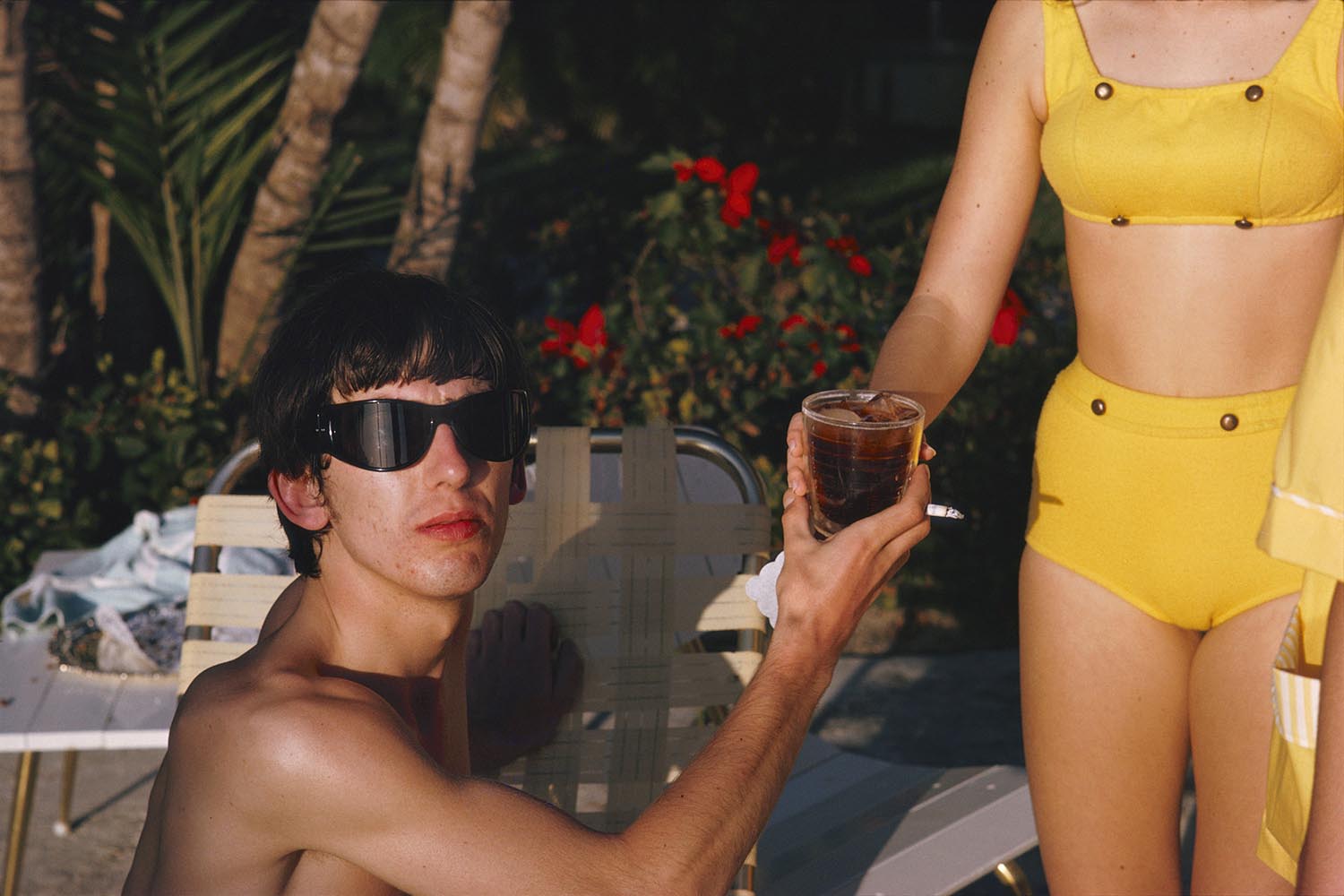 images apart from other documentary photography of that era?
SMK: These photographs provide a unique perspective on a well-documented moment in music history. The Beatles were one of the most heavily photographed bands of their time, with unprecedented media coverage. Despite the abundance of images from this period, McCartney’s photographs offer a fresh viewpoint—that of an insider, capturing the chaos and intimacy of the Beatles’ rise to fame from within the “eye of the storm.” His images allow us to experience the band’s journey in real-time, from his personal perspective, as they traveled through various landscapes and interacted with each other and their entourage. This immersive quality sets his photographs apart, providing an intimate and comprehensive look at what it was like to be on tour with the Beatles during their ascension to global stardom
MerciSF: The photos were found in his personal archive in 2020. So how did they make their way from forgotten negatives to a major exhibition?
SMK: It was serendipitous. During the COVID pandemic, McCartney was working on an exhibition of his late wife Linda Eastman McCartney’s photographs with his archivist. He rediscovered negatives from his own photography that he hadn’t looked at in years. Realizing their value, he decided to bring them to the attention of the National Portrait Gallery in London, which then organized the exhibition. The show has since traveled to the Brooklyn Museum in New York, the Portland Art Museum, and the Chrysler Museum in Virginia. All the prints were made specifically for this exhibition, either from the original negatives or enlarged from contact sheets when negatives were missing. It gathers over 250 works and ephemera.
MerciSF: Would you say that McCartney has a specific photographic style ? Do you feel an influence of the photographers of that time?
SMK: McCartney’s photographic style reflects the cultural and artistic trends of his time, influenced by the spontaneity and ease of use offered by the 35mm handheld cameras of the 1950s. His work shows a more casual, imperfect aesthetic, embracing blur and movement, which aligns with the documentary and photojournalistic styles of the era. Additionally, his photographs draw inspiration from cinema, particularly the French Nouvelle Vague and British kitchen sink dramas.
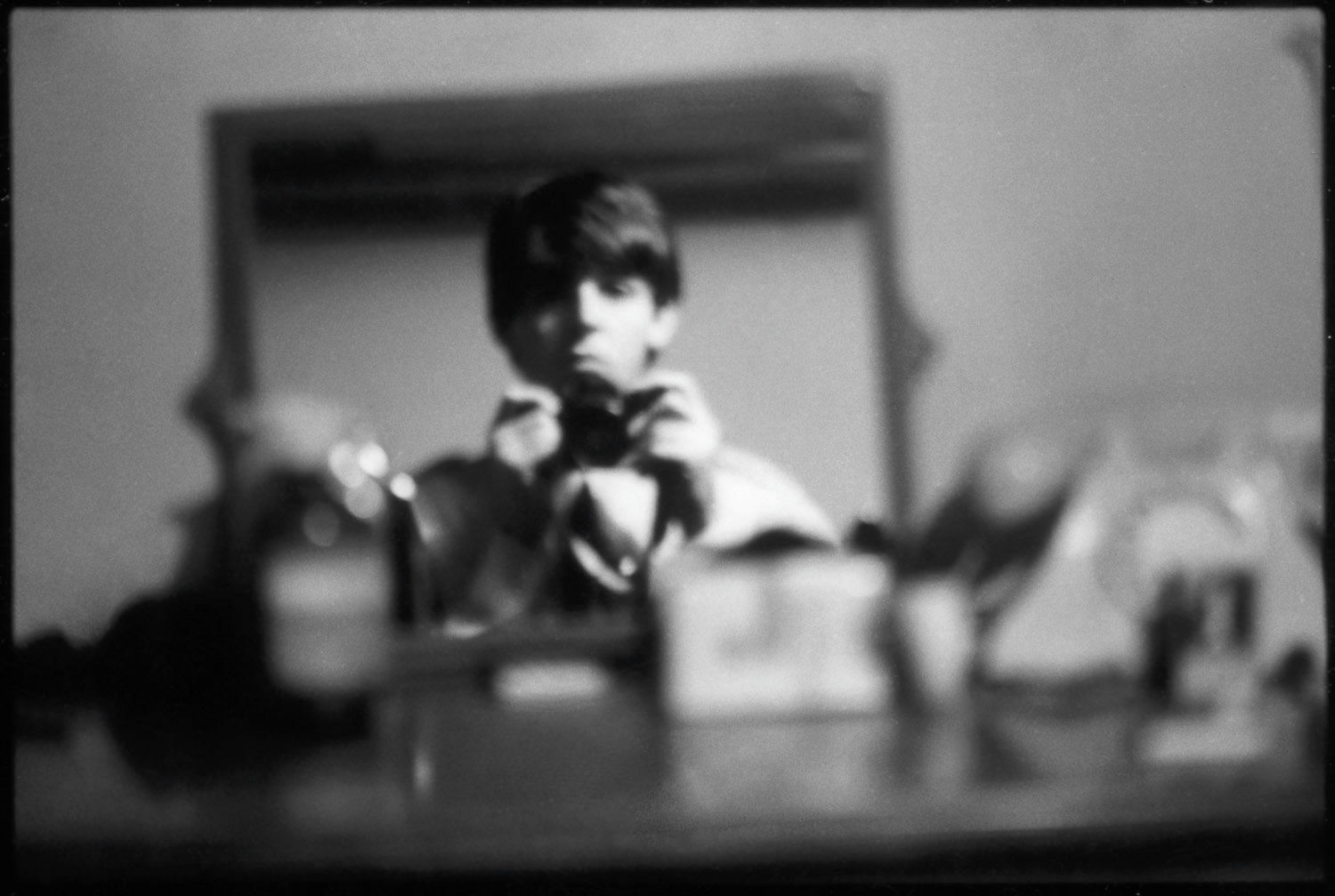 Personally, I am particularly fond of the self-portrait at the front of the exhibition, which emblematically captures McCartney’s identity as a photographer. This image sets the tone for the show, highlighting his artistic ingenuity and experimental aesthetic. The blurriness of the photograph adds a nostalgic and romantic quality, reflecting a significant moment in his rise to superstardom. The photograph, reminiscent of the Lacanian “mirror stage,” shows McCartney confirming his existence and identity as an artist.
MerciSF: How do you think this exhibition is going to resonate here in San Francisco?
SMK: The Beatles have a universal appeal that transcends national and generational boundaries, making their music relatable to people all over the world. However, San Francisco holds a special place in Beatles history, which will likely amplify the resonance of this exhibition for local audiences. The exhibition covers the Beatles’ first global tour from December 1963 to February 1964, which included stops in Liverpool, London, Paris, New York, Washington D.C., and Miami. Six months later, they launched their first official North American tour with a concert at the Cow Palace in San Francisco. This tour marked the beginning of their global domination and included another performance at the Cow Palace in 1965 and their final North American concert at Candlestick Park in San Francisco in August 1966.
San Francisco’s significant role in the Beatles’ touring history creates a unique connection between the city and the band. Additionally, the Bay Area’s rich musical tradition, which includes iconic artists like the Grateful Dead and Joan Baez, further enhances this connection. The region’s legacy as a hub for musical talent and innovation will likely make this exhibition particularly meaningful and engaging for local audiences. The opportunity to see the Beatles’ rise to fame through the intimate and personal lens of Paul McCartney’s photography will offer visitors a unique and immersive experience, allowing them to feel a part of this historic moment in music history.
MerciSF: Anything else you would like to add?
SMK: I just want to emphasize that this is a really unique opportunity to re-examine a moment that we all seem to already know from our, within cultural history, and to get to see it from a new perspective and feel like we were brought inside is really something special about this exhibition. It also allows us to understand McCartney not just as the musical legend that we know him to be, but to understand his artistic contributions in a more holistic way to understand him, not just as a musical artist, but also as a really talented visual artist as well. So to reevaluate, McCartney as an artist, to reevaluate this moment in time from a historical perspective. And I think also to, it’s an opportunity to have fun in the museum. I think it brings people together, it’s something people can connect on. and hopefully will be exciting for our visitors to–
MerciSF: Can you coin someone as a visual artist just on one body of work? So can we really call McCartney like a visual artist or a photographer?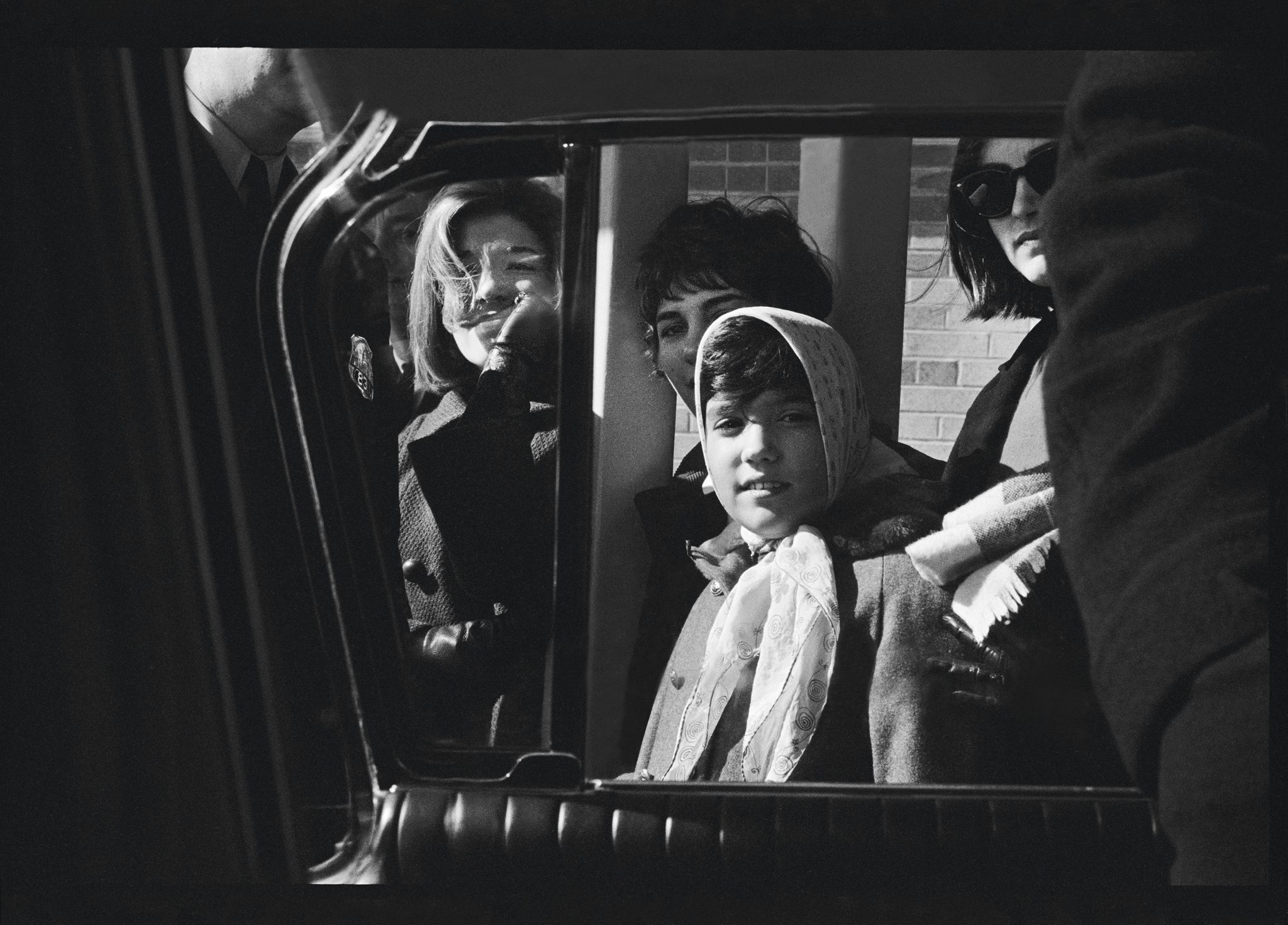
SMK: While it might be unconventional to label someone as a visual artist based on a single body of work, it’s not unprecedented. Photographers like Vivian Maier, who was discovered posthumously, are now recognized as significant figures in photography despite not having a extensive professional career. McCartney’s photographs, though not intended to establish him as a master photographer, hold artistic value and offer a unique narrative perspective. The exhibition aims to showcase his work for its storytelling and documentary qualities, rather than positioning him as an undiscovered genius in photography.
As McCartney said “ I’m not setting out to be a master photographer, but more of an occasional photographer who is in the right place at the right time”
MerciSF: You have been appointed as a curator for the Fine Arts Museums of San Francisco, including the Legion of Honor and the de Young. What excites you most about this new role, and do you plan to focus on documentary photography?
 SMK: Not exclusively, no.I am thrilled to cover the entire history of photography, from landscapes and portraits to documentary styles. My role involves renewing the museum’s commitment to photography, which includes a collection of nearly 8,000 works strong in 19th and 20th-century photography, with some contemporary pieces as well. I am particularly excited about the increased attention and resources dedicated to building our photography program. This will involve creating exhibitions and showcasing our collection more prominently. There are incredible gems in the collection that haven’t been on view in a long time, and I am eager to reanimate and expand the permanent collection. I have already made several exciting acquisitions that I hope to display soon. Overall, I am enthusiastic about building on the existing legacy while bringing fresh, contemporary perspectives to the museum.
MerciSF: Finally, could you please name a few favorite places in the Bay Area?
SMK: I love spending time by the water, especially at Ocean Beach or Baker Beach. I also enjoy hiking in Marin. As for dining, I’m a big foodie and have many favorites, but some of my top spots are Rose’s Cafe for brunch, and Cotogna and Aziza for other meals
MerciSF: A final word on French Photography at the FAMSF?
SMK: We have very strong holdings for 19th century French photographs. I recently was looking at André Disderi who created the Carte de Visite format, or at Charles Marville, Eugene Atget and even earlier photographers as well. There are many!
MerciSF: Oh! Are you preparing something on French photography?
SMK: Not right now.. but perhaps in the future… you’ll have to come back!
Merci Dr Sally Martin Katz!
Paul McCartney Photographs 1963–64: Eyes of the Storm
Address: deYoung Museum – Golden Gate Park – 50 Hagiwara Tea Garden Drive -San Francisco
Dates: March 1 to July 6, 2025
More information here
Other significant works by Sally Martin Katz:
As an independent curator, she curated the Louis Stettner retrospective at the Fundación MAPFRE in Madrid (May 2023) and in Barcelona and she is the author of the exhibition catalogue. She has co-edited several books, including American Geography: Photographs of Land Use from 1840 to the Present (2021), snap+share: transmitting photographs from mail art to social networks (2019), and Louis Stettner: Traveling Light (2018), which accompanied the exhibitions at SFMOMA.


