


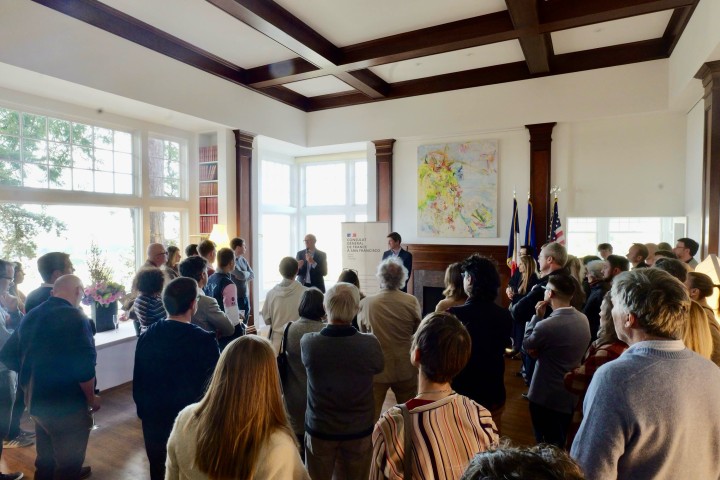
On May 2, 2025, at the Résidence de France, Roland Lescure, Member of Parliament for French citizens abroad in the North America zone, met with the French community in the San Francisco Bay Area to discuss the growing concerns of expatriates, particularly in light of the current political climate in the United States. During this meeting, he addressed the results of a survey revealing that nearly 20% of French nationals in the U.S. are considering returning to France—a trend driven by geopolitical uncertainty. In a brief interview, Mr. Lescure shared his vision for the future of expatriates, outlined government measures to support researchers and young talent, and emphasized the importance of maintaining a strong bond of trust between the French state and its citizens abroad.
MerciSF: Hello Mr. Lescure, thank you for taking the time to speak with us today. To begin, nearly 20% of respondents in your recent survey are considering returning to France. What are the main reasons behind this high figure, and what can the government do to better retain or support these French nationals abroad?
Roland Lescure: It is indeed a high figure. When compared to other countries like Canada, where only 5 to 6% of French nationals consider returning to France, it highlights how deeply the situation in the United States is affecting the French living here. In particular, the potential re-election of Donald Trump plays a significant role. The survey shows both macro-level concerns—like the economy and climate change—and very practical issues, such as children’s education or impacts on researchers. We need to provide more practical information on matters like social security, administrative procedures, and voting processes, and help those who want to return do so with ease.
Another notable trend is the increase in French passport applications, particularly among Americans rediscovering their French roots. We’ve observed that more and more people—especially younger generations from immigrant backgrounds or with French ancestry—are seeking French nationality. This trend is driven by several factors: a desire to strengthen cultural identity, career opportunities in Europe, and concerns about the political situation in the U.S. French consular authorities have implemented new measures to facilitate these requests, including special outreach operations to meet the growing demand.
MerciSF: You mentioned growing concern over the political climate in the U.S. Does this change how you represent French citizens abroad in your work at the National Assembly?
Roland Lescure: Yes, it significantly changes my approach. Europe’s shift toward a more autonomous relationship with the United States is a major development. We need to assert our values more strongly—especially democracy and sovereignty—while reinforcing our stance on strategic topics such as industry, technology, and defense. The current geopolitical situation compels us to rethink our position in Europe so we’re not merely spectators of the changes happening here.
MerciSF: Young people, especially researchers and students, have expressed particular concern about the situation. What specific measures are being considered to meet their expectations?
Roland Lescure: Researchers are a particularly vulnerable group, as the survey shows. We’re finalizing a program to help them return to France, which the President will soon announce. This “repatriation scheme” aims to support researchers unable to work in certain sensitive fields in the U.S. The goal is to boost France and Europe’s appeal to such talent. The U.S., historically a hub for researchers, is now less welcoming, and we must seize this opportunity to bring talent to Europe.
MerciSF: You’ve spoken about a “pact of trust” between the French government and citizens abroad. What initial actions would you like to see taken under this framework?
Roland Lescure: This pact of trust involves improving communication and support for French citizens abroad. For instance, we must stay in regular contact with our nationals, inform them about political and economic developments, and assist them with administrative procedures. The recent consultation was a first step, but the idea is to sustain this dynamic over time, with regular initiatives to gather feedback and concerns. Maintaining that connection is essential.
MerciSF: In light of the survey results, do you plan to organize additional participatory initiatives to stay connected with French citizens in North America?
Roland Lescure: Absolutely—it’s essential to continue this participatory approach. The response to the survey was very encouraging, and it would be useful to conduct another round in six months to a year to track developments. Maintaining direct contact with the French community helps us better understand their needs and implement policies that provide concrete solutions.
MerciSF: Thank you very much, Mr. Lescure, for these insights. We’ll be closely following your upcoming announcements.
Roland Lescure: Thank you—it’s always a pleasure to speak directly with the French community in the Bay Area.


