


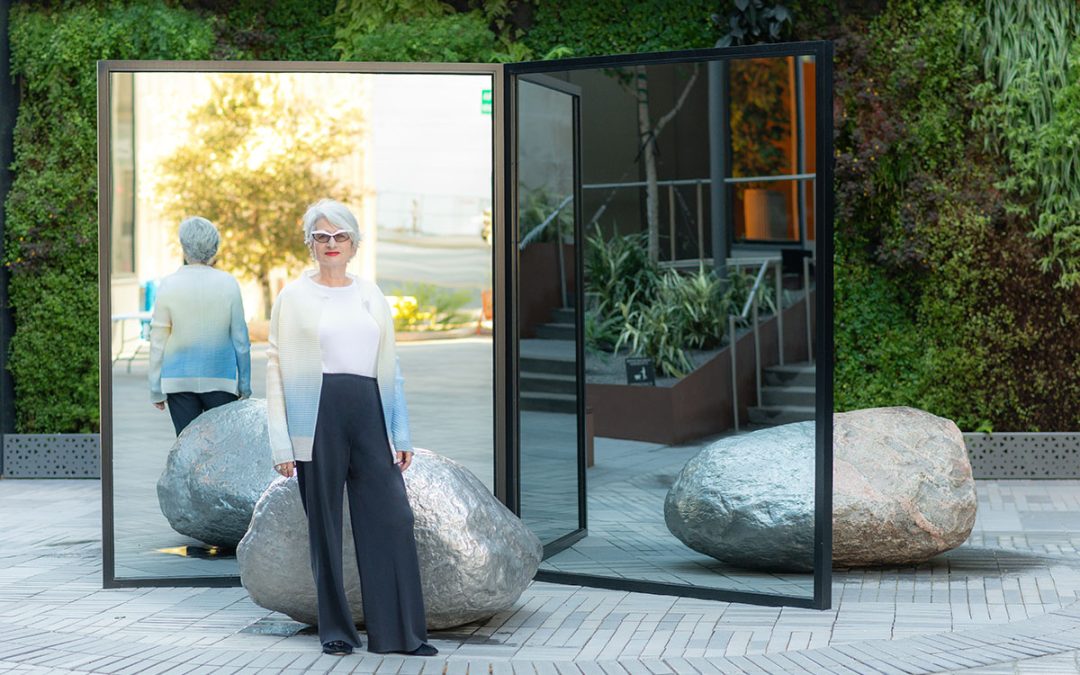
In anticipation of the French-American Chamber of Commerce event “Rethinking Urban Design for a Sustainable Future” on December 11, in partnership with MerciSF, we had the pleasure of speaking with Anne Fougeron, Architect Extraordinaire, who has been delighting us for years with her innovative conceptual houses ( Fougeron Architecture). This time we delved into her insights on the future of urban planning. She welcomed us warmly into her home for a thoughtful conversation.
Bonjour Anne, you have been living in San Francisco since your architecture studies at UC Berkeley. You build a lot of housing. Is this a deliberate choice?
Absolutely. For me, housing is the basis of a city’s social balance. There needs to be housing for all social categories, ideally mixed within a neighborhood or even within a single building. This creates more interesting cities where everyone is represented in various neighborhoods, instead of segregating into functional zoning (social, commercial, etc.). Communication and interactions are smoother when there is diversity.

You have done significant work in the TransBay Area (now called East Cut). How do you envision the renewal of Downtown?
Well, at the moment, construction is somewhat halted across San Francisco. High interest rates and construction costs prevent developers from making their projects profitable. We are waiting for more favorable days for urban development and solutions for all those empty offices. San Francisco will always bounce back, given its unique location, history, and creative spirit. This is just a phase.

Your buildings are always perceptible on two levels: the urban scale but also the pedestrian scale, with attention to the details of the ground floor, which are on a human scale compared to the rest of the building. Is this important to you?
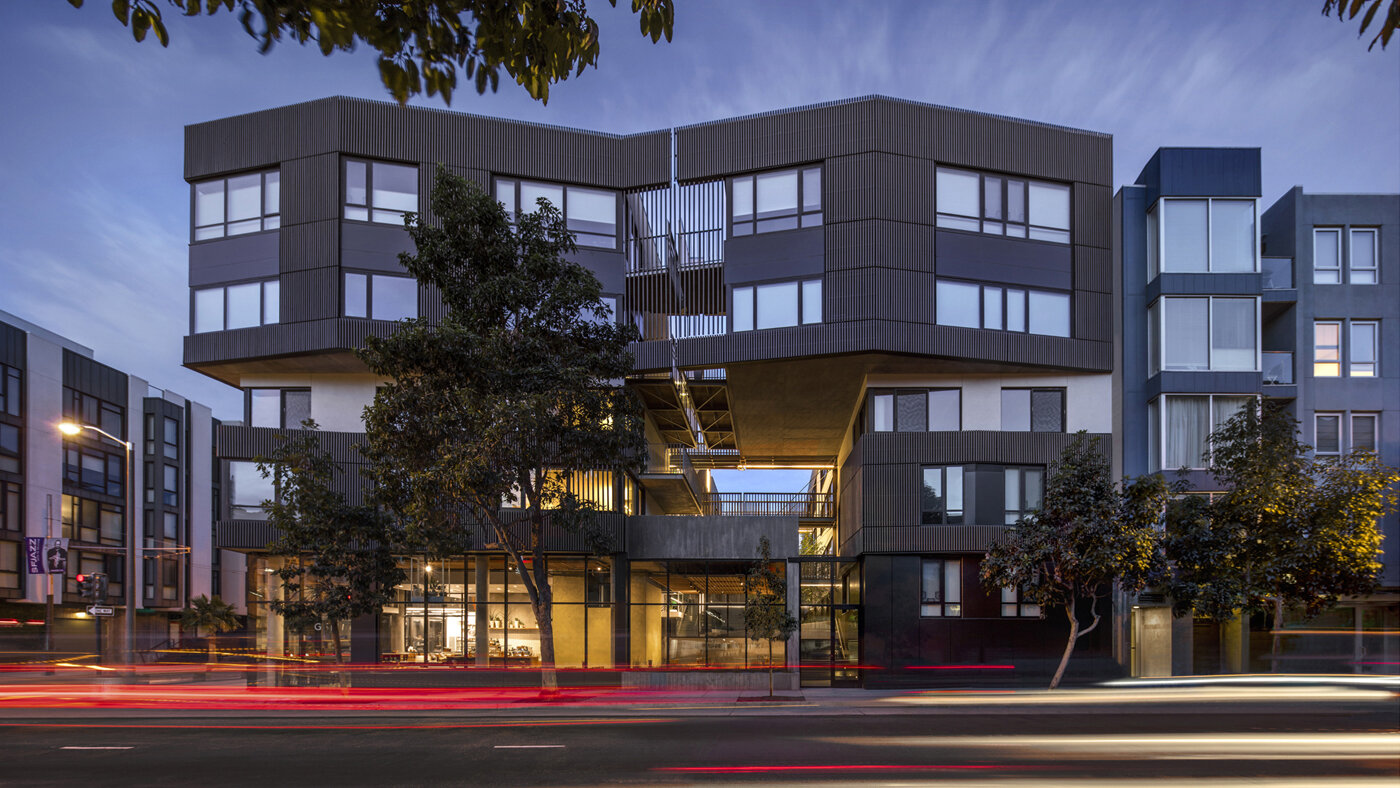 Yes, pedestrians walking along these streets should be able to interact with an active and engaging ground floor. There should be shops, restaurants, etc., but also details (doors, lighting, sculptures, plants…) that make the walk more pleasant and interesting. This is a constant negotiation with developers, who mostly want to maximize square footage and tend to design bulky buildings to minimize liminal space. But cities need these two scales: one addressing the monument, visible from afar, and another, more connected to the urban fabric, face to face with the building.
Mission Bay has been developing for years but is not lively enough for its residents. What is your stance on new neighborhoods?
Currently, there is a development plan for San Francisco toward the south along the bay. To ensure its success, a good urban design is essential. In the case of Mission Bay, Third Street is a bit too wide; pedestrians are not inclined to cross it, which keeps the waterfront slightly too distant. The diversity of architectures is also not broad enough. A bit further south, DogPatch achieved a better urban mix with a greater variety of scales and programs, combining old houses and warehouses within the same block, which works better.
San Francisco’s piers are underused. Should we first plan public spaces before proposing more commercial or functional offerings?
Yes, urban design with a good Framework Plan is fundamental to city design. Pier 70 is being developed, with historic buildings that will benefit the site and the public realm along the water. Soon, the entire waterfront will be connected by a pedestrian and bike path for better urban readability.
Further down, Candlestick is also building new neighborhoods and has just opened a new park as a preview for its residents.

How is the development of Treasure Island, just off the Bay Bridge, progressing?
It is a beautiful project, with up to 8,000 housing units, 27% of which will be affordable, and several neighborhood amenities with breathtaking city views. An enviable location not too far from downtown, now connected by a ferry embracing its maritime environment. There is also a marina and a small beach on the East Shore. Economically, developers here also struggle to complete the constructions, but it will improve over time.
San Francisco’s approach to sea-level rise is to raise buildings. In Europe, they adopt a different policy: letting water flow and recede, controlling it. What is your opinion on this?
Here, the waterfront is very old, with most of it dating from reconstruction after the 1906 earthquake and Daniel Burnam’s 1914 plan, and requires renovation regardless. Since it is costly, it is better to do it with the future in mind and plan for rising water. In San Francisco, sea levels are projected to rise between one and two meters by 2100, so buildings will be raised by nine feet to ensure they can maintain their functions under the most adverse conditions. The Pacific Ocean is not forgiving: its tides can be violent, so the rising water level considers not only sea-level rise but also king tides and wave action.

Artificial intelligence is developing in architecture as elsewhere. Do you think it hinders the architect’s creativity?
I still draw by hand and paint… I have tried some of these AI programs, and so far, they have not significantly fueled my creativity. The results have been a bit ordinary or already seen… but maybe it is more about asking the right question to get what you are looking for.
Do you plan to stay in San Francisco forever?
Ah, I always feel very French: I love good food, I have a critical mind, but in California, there is this energy and optimism that suit me quite well. People are positive. I also love being outdoors, and here, nature is part of the city; it is visible everywhere.
by Isabella Demeulenaere & Arthur Perez


