


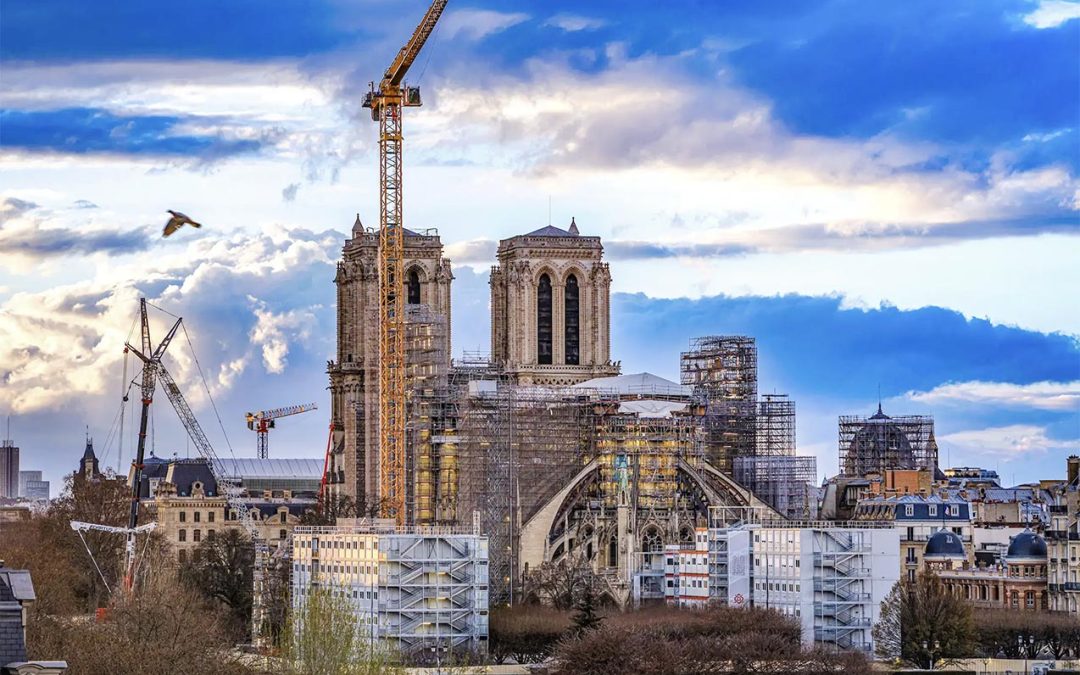
On Saturday, March 8, 2025, at the Legion of Honor, the World Monuments Fund, in partnership with Villa Albertine and the Fine Arts Museums of San Francisco, hosted a lecture and panel discussion on the restoration of Notre Dame de Paris following the devastating 2019 fire. The event featured Philippe Villeneuve, Chief Architect for Historic Monuments, who has led the ambitious effort to return the cathedral to its pre-fire state.
Villeneuve, a figure known for his unwavering dedication to historic preservation, has resisted pressures to modernize the cathedral’s restoration. Instead, he has championed an approach rooted in fidelity to Gothic craftsmanship, emphasizing the symbolic and cultural significance of the structure. His perspective raises profound questions: Should preservation focus on retaining original materials, or should it prioritize the longevity of the building itself?
 Drawing inspiration from the philosophical and aesthetic concepts of Japanese heritage restoration and preservation, Shikinen Sengū—where temples are rebuilt identically every 20 years using traditional methods rather than relying solely on aging materials—Villeneuve embraces an approach where weathered stone can be replaced with newly carved pieces possessing the same properties, and timber for the framework can be worked using the same ancestral techniques. He has sought to make Notre-Dame a living monument rather than a fragile relic. His vision extends beyond the structure itself; he envisions a museum dedicated to the restoration process, showcasing the expertise of artisans and the techniques rediscovered during the reconstruction.
Villeneuve’s commitment to authenticity extends to Notre Dame’s stained glass windows, many of which were designed by the 19th-century architect Eugène Viollet-le-Duc. Despite pressure from certain officials and executives to replace these historic pieces with contemporary designs, Villeneuve has staunchly defended their preservation. Since the windows were untouched by the fire, he argues, there is no justification for removing them. For him, Viollet-le-Duc’s work is as much a part of the cathedral’s identity as its medieval foundations, and replacing the glass would undermine the very philosophy of restoration that prioritizes continuity over reinvention. His stance reflects a broader debate in heritage conservation: should restoration honor the totality of a building’s history, or can modernization enhance its relevance for future generations?
 Amid his unwavering commitment to restoring Notre Dame as it was, Villeneuve made one quiet exception: a small remnant of molten lead that fell from the burning spire into the hand of a Christ statue near the choir. Rather than removing this accidental mark of the fire, he chose to preserve it as a discreet yet powerful testimony to the cathedral’s ordeal. This subtle detail, almost invisible to the casual visitor, stands as a quiet memorial to the tragedy—acknowledged only by those who know where to look. It allows the building to be experienced as it was before the fire, while still holding a trace of its recent past, a silent scar woven into the fabric of its rebirth.
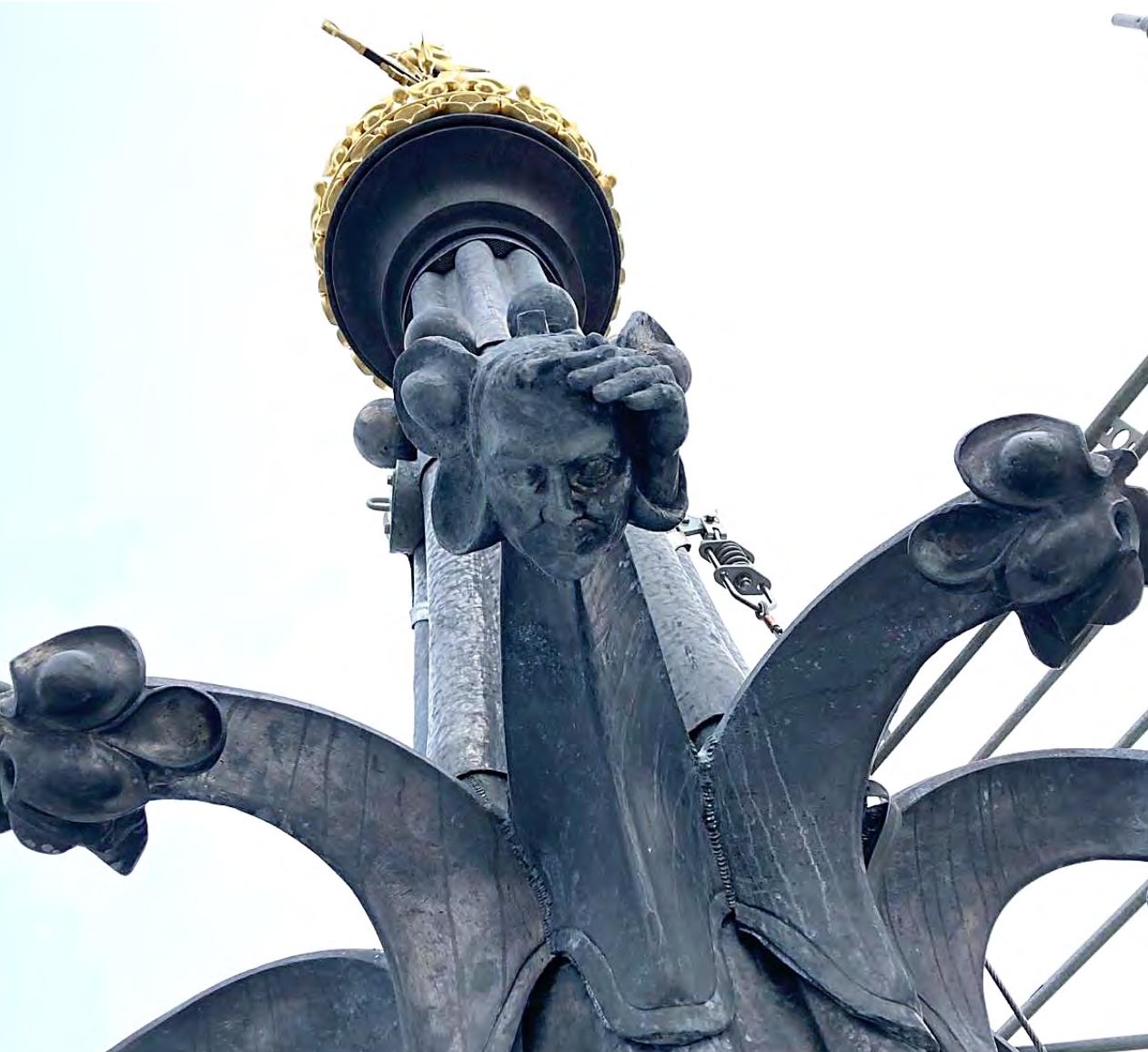
He also spoke about the personal connection he has formed with the cathedral. While he rejects the idea that 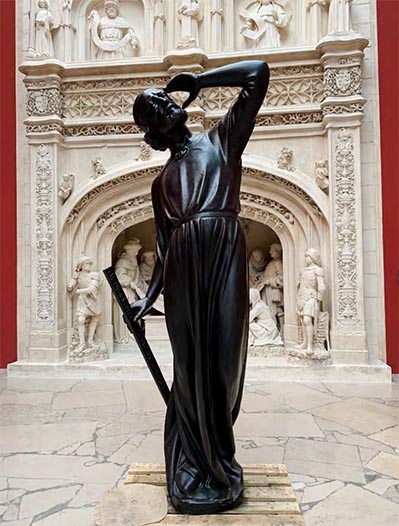 Notre-Dame has become “his Lady,” he has nonetheless left a discreet signature on the new spire: his own sculpted face, almost imperceptible, gazing downward in admiration. It looks toward the statue of Viollet-le-Duc, which itself looks upward—and will soon be reinstated—in tribute to the countless artisans who contributed to the cathedral’s rebirth.
As an architect and urban designer working in San Francisco, I found Villeneuve’s reflections particularly resonant. In my own work on the resilience
of the city’s waterfront and the preservation of its historic piers, similar dilemmas arise: How do we adapt historic structures to contemporary challenges without compromising their integrity? The need to reinforce the Embarcadero against sea-level rise forces us to confront the delicate balance between honoring the past and ensuring a future for these landmarks. Villeneuve’s perspective serves as a compelling reminder that preservation is not merely about maintaining buildings—it is about safeguarding the narratives and cultural legacies they embody.
Merci Arthur Perez-Marseres
https://arthurpm.com/


